
On Saturday June 9th, lead teachers Kelli and Katherine set out for a North Cascade adventure in Deming, Washington. Hiking the rolling hills along the North Fork Nooksack River, they embraced the glowing green forest covered in ferns, moss and old growth trees, (as the kids would call it, “Grandpa” trees). The great outdoors not only helps these busy start-up business women to gain balance and feel centered, it continues to inspire their work for Little Cubs. As they hiked along the rushing river, they stopped along the way to identify native plants of Washington, taking note of how these will be integrated into the outdoor curriculum at Little Cubs Preschool. Take a peek below to join in on the adventure!
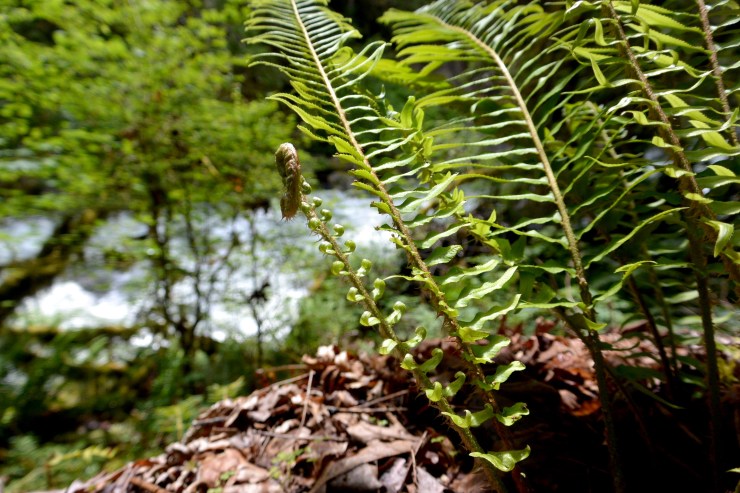
A Fiddlehead Fern, otherwise known as Fiddlehead Green, is a frond; a large divided leaf of a fern. If the frond is left on the plant, it will unroll into a new frond. Often, Fiddleheads are harvested before the frond has opened and has grown to short heights. Used as a vegetable food source, they are high in iron, fiber and have anti-oxidant properties.
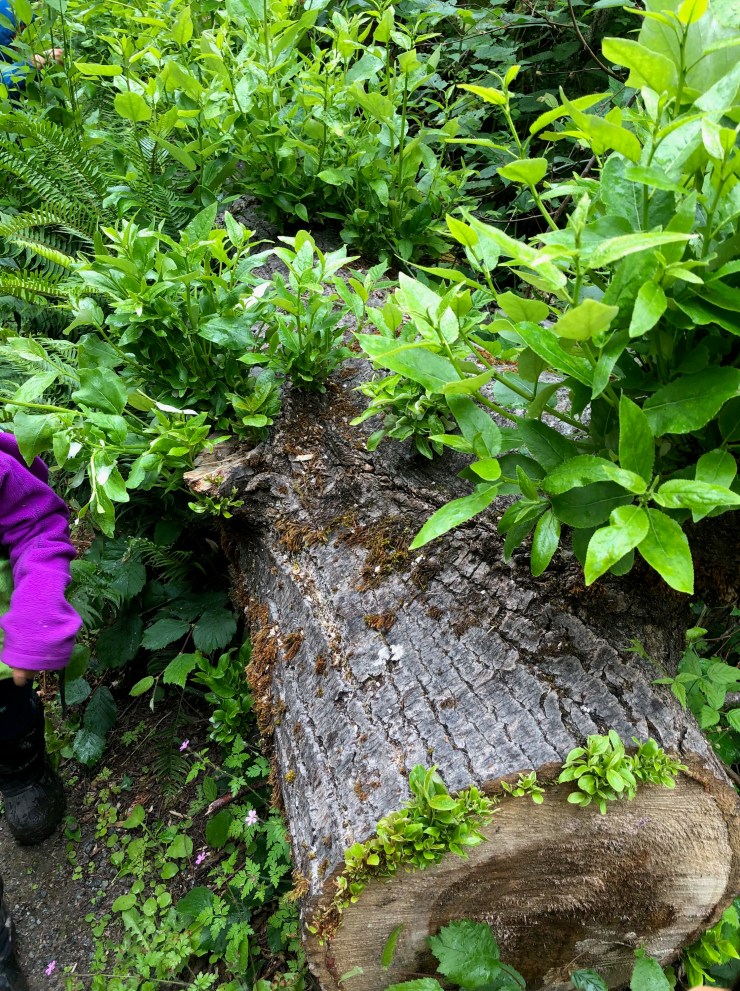
As old growth trees fall or have limbs separated, it is crucial to allow them to lay on the forest floor through it’s years of decay. Fallen trees on the forest floor provide ecological benefits through it’s moisture and nutrient – rich wood. This includes the facilitation of seedlings, a home for insects, larger animals and plants to live and grow.
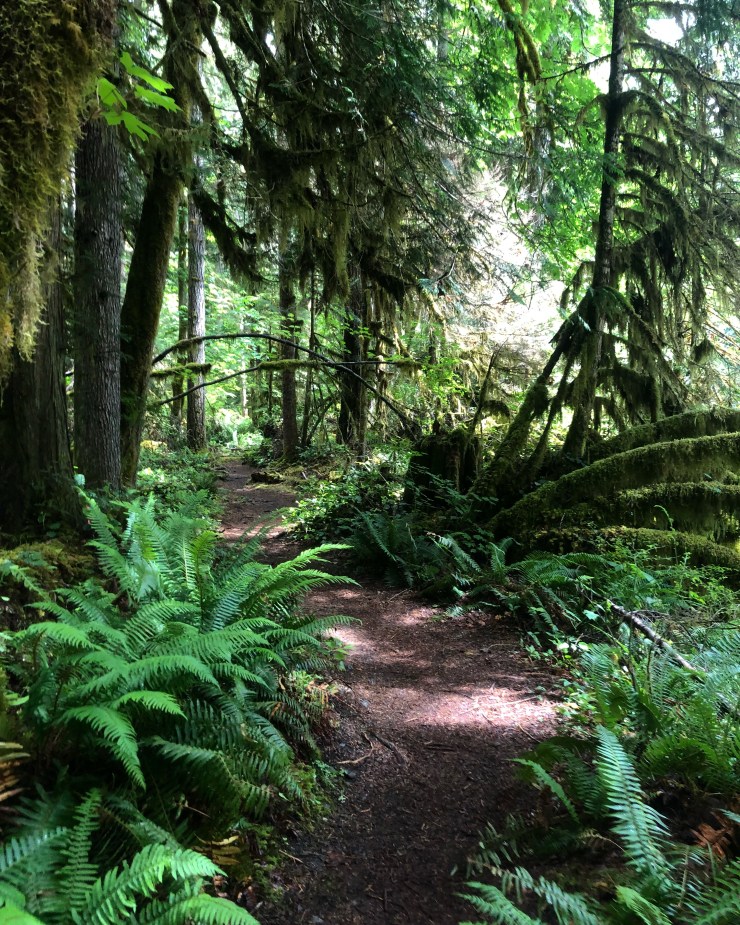
Known for it’s sword shaped fronds, Sword Ferns are evergreens covering the under-story of low-elevation forests. They grow at the short heights of 50 – 180 centimeters and have a large round base. They thrive in cool, damp, sunlight areas.
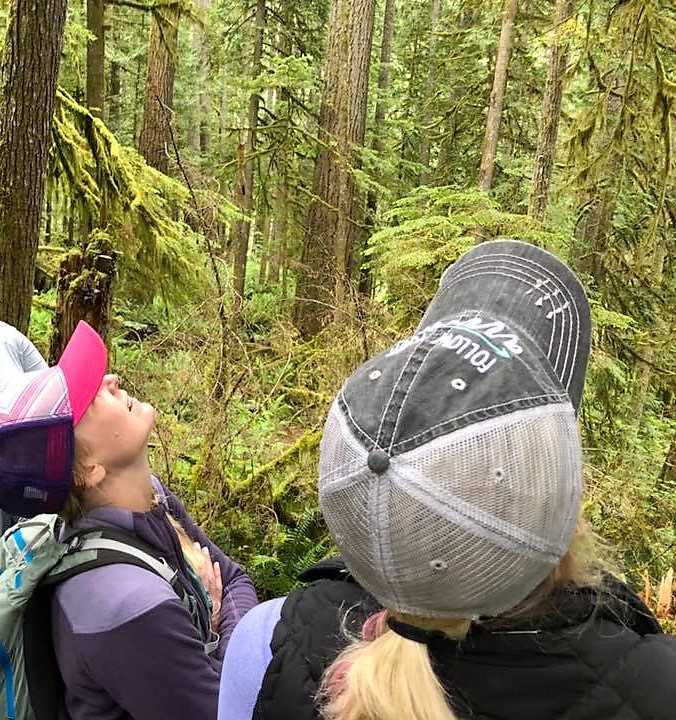
Dubbed the name, Evergreen due to the fact that they stay “green forever” provide the outdoors with vibrant color all year long. As the deciduous trees have fallen leaves and “sleep” for the winter, the variety of Evergreens not only provide beauty but act as a canopy for the forest animals (and hikers!) in the rainy season of winter. Evergreens can grow up to 200 feet or more.
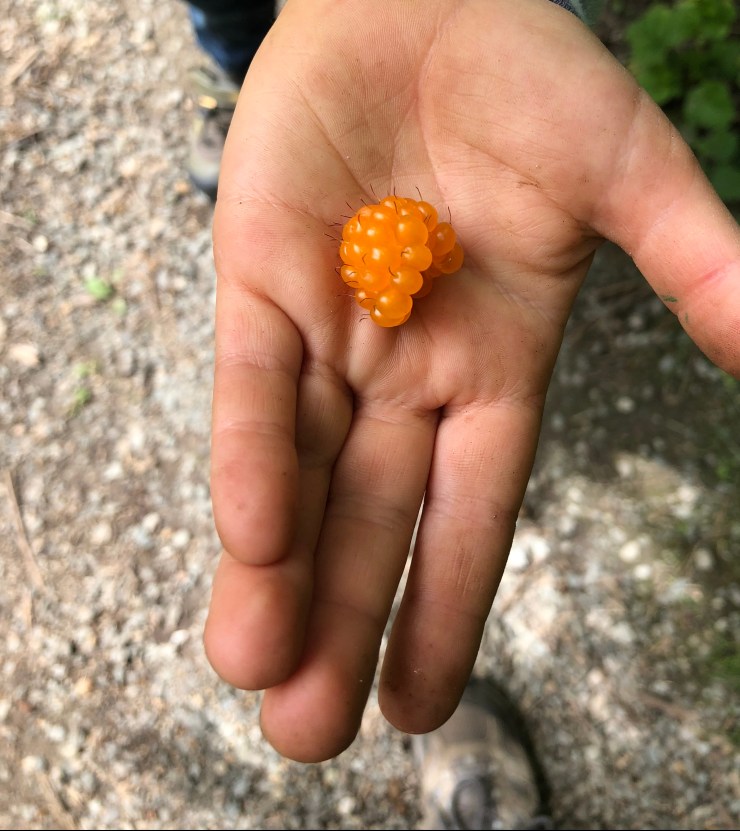
Salmonberries grow along the Pacific Coast from Alaska to California. In the rose family of bramble bushes, Salmonberry bushes grow in open forest areas with sunlight or partially sunny areas. The name was developed by the First Nation’s Native people who ate the raw sprouts in the spring with their salmon meat. Once fully bloomed, the fresh berries are a delicious juicy treat for all!
Thank you for taking a stroll with us as Little Cubs teachers continue to inspire, and become inspired by the natural world and all it has to offer. We hope you can join us on the next adventure!

 Little Cubs Preschool